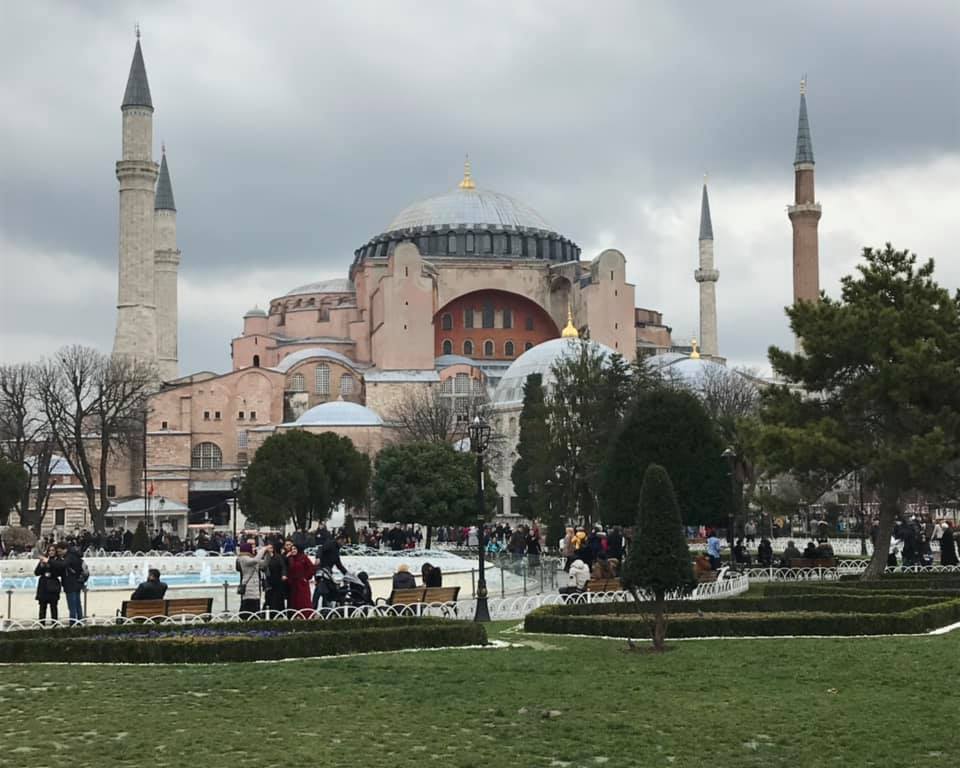
Istanbul! There’s something magical about the city, even if you haven’t been there. It’s bang in the middle of Asia and Europe, and that Middle-eastern positioning conjures up images of narrow streets, with perhaps a haunting tune playing somewhere, cats and the smoke from hookahs and piping hot cups of tea. Well, it is a little bit like that, but beyond that, it is a city that has taken on the best of both continents, and is now a city we would gladly go live in.
We arrived in Istanbul after a brief stopover at Dubai, and took a taxi straight to our AirBnB in Fatih. A lot of research had gone into choosing the best place to stay in the city, and we were torn between Fatih on the European side and Kadikoy on the Asian side. But when we arrived, we were so glad we had chosen Fatih.
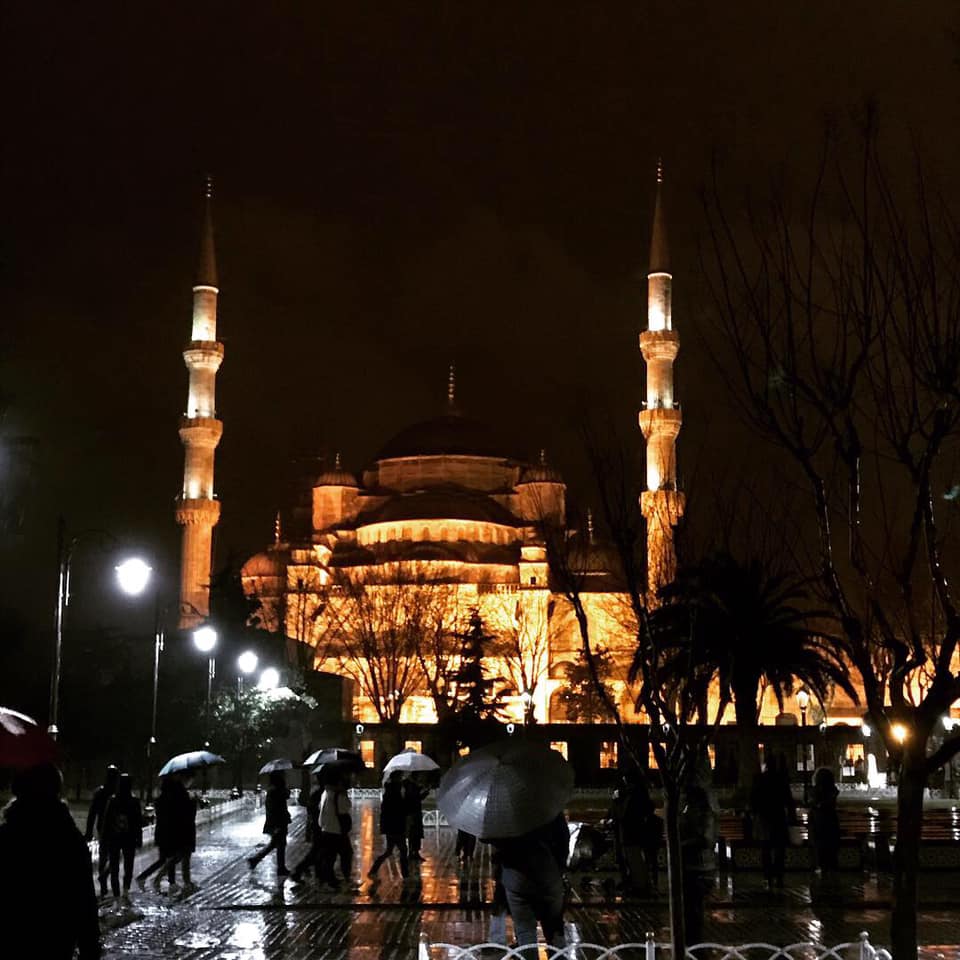
It was a rainy evening when we got there, and right after checking in, we went out with an umbrella borrowed from our host. In just 500 meters, we saw over a taupe wall, the tops of the Blue Mosque. It was closed then, but the square in front of it was open and thriving. We smiled past eager shop owners calling us in for a cup of tea and walked past huge obelisks on the rain-soaked streets, even as we turned up the collars of our jackets against the cold December wind.
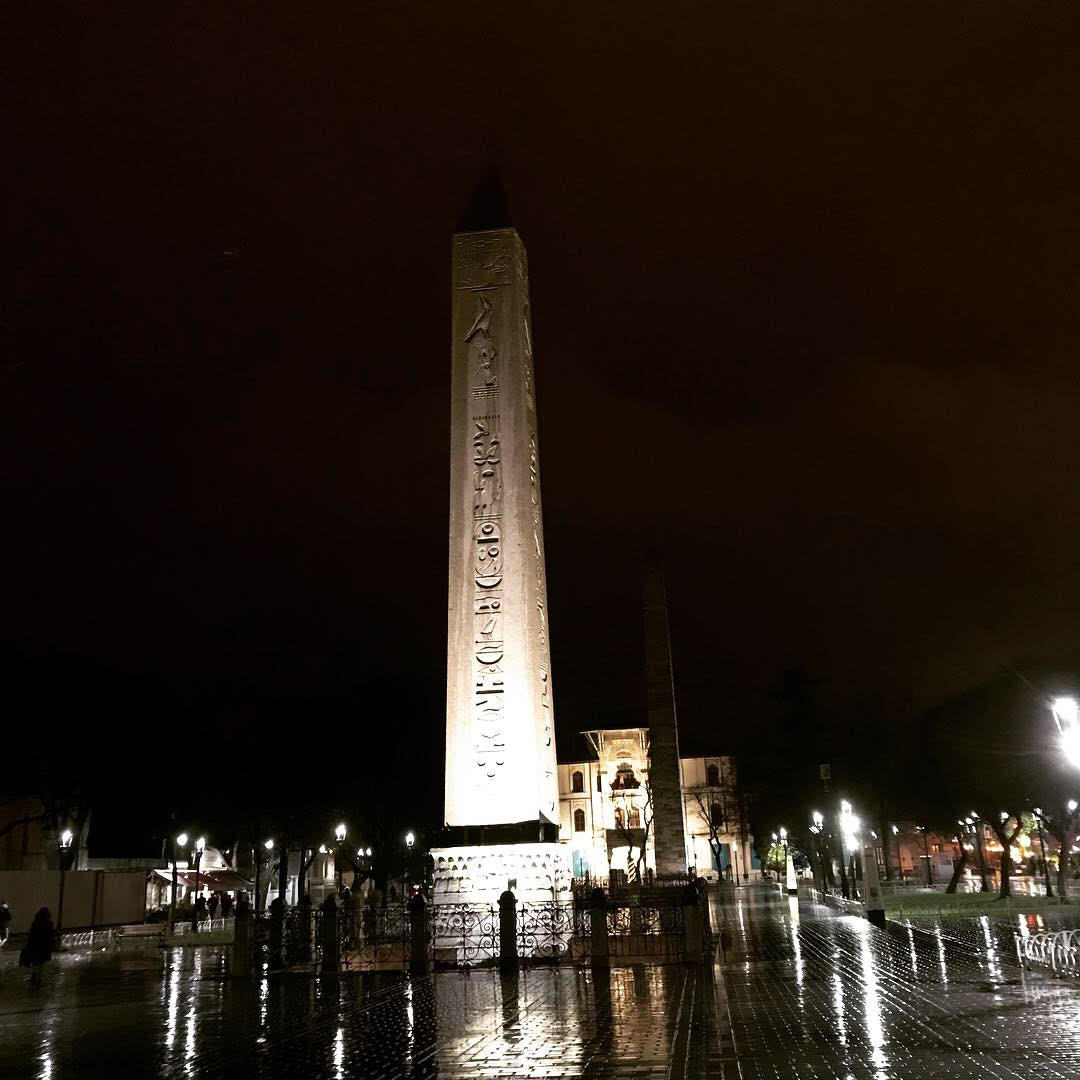
The obelisk at the square is a remarkably well-traveled item – having moved from the Temple of Karnak in ancient Egypt to Constantinople, as Istanbul was known then. It is now shorter by around 30 feet from its original size, but the hieroglyphs have survived, depicting Pharao Thutmosis III’s vistory crossing over the Syrian Euphrates river. On two sides, you will also see inscriptions in Latin and Greek, reminiscent of the obelisk’s journey to its final home.
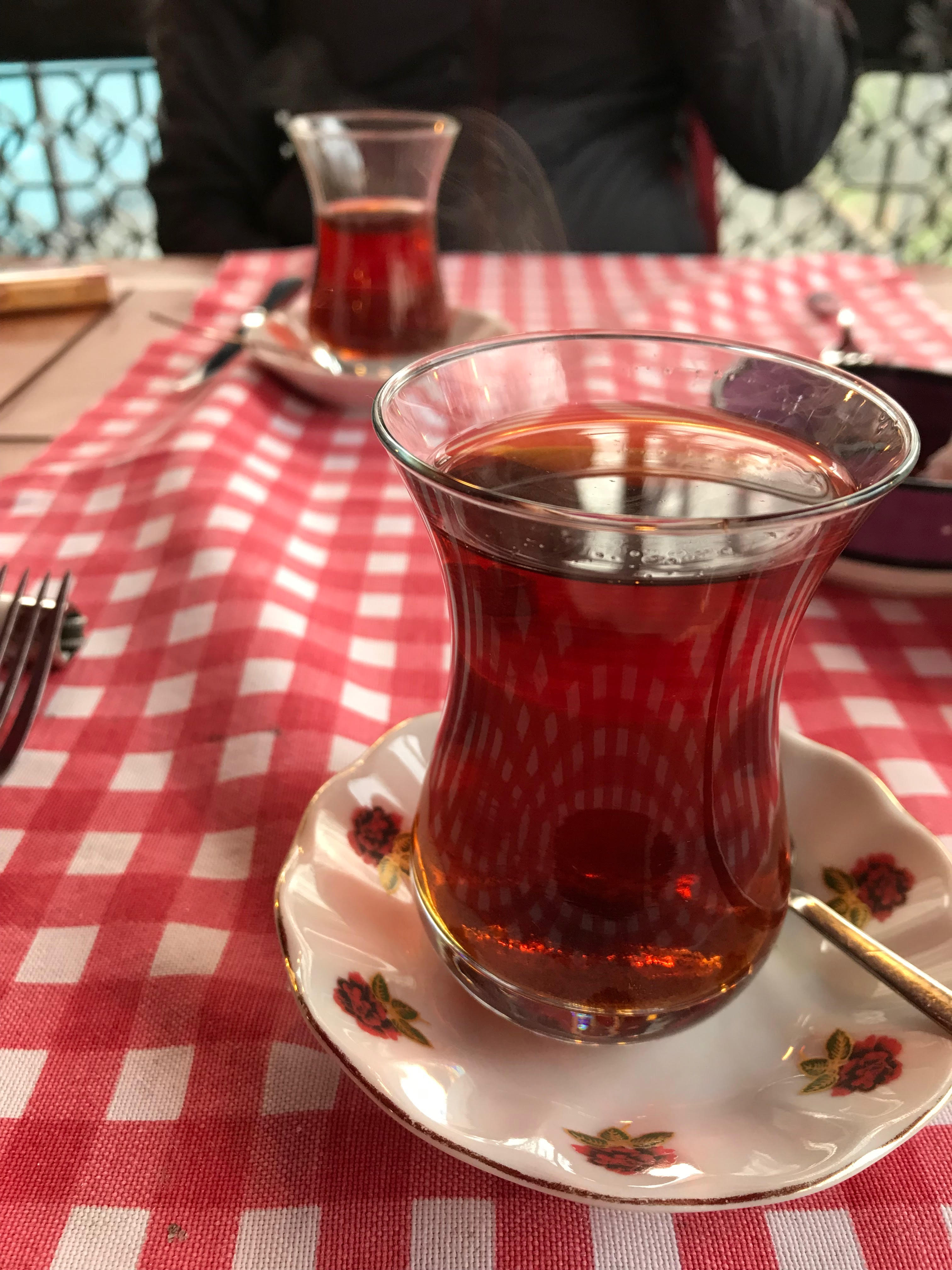
Around the obelisk, even in that biting cold, were tourists, musicians and cats, each to his own device. We stopped by at one of the stalls for a quick kebab and were immediately greeted with a welcoming cup of tea. Served in little tulip-shaped glasses, Turkish tea is made without milk and sugar can be added later. And it is among the best we have had.
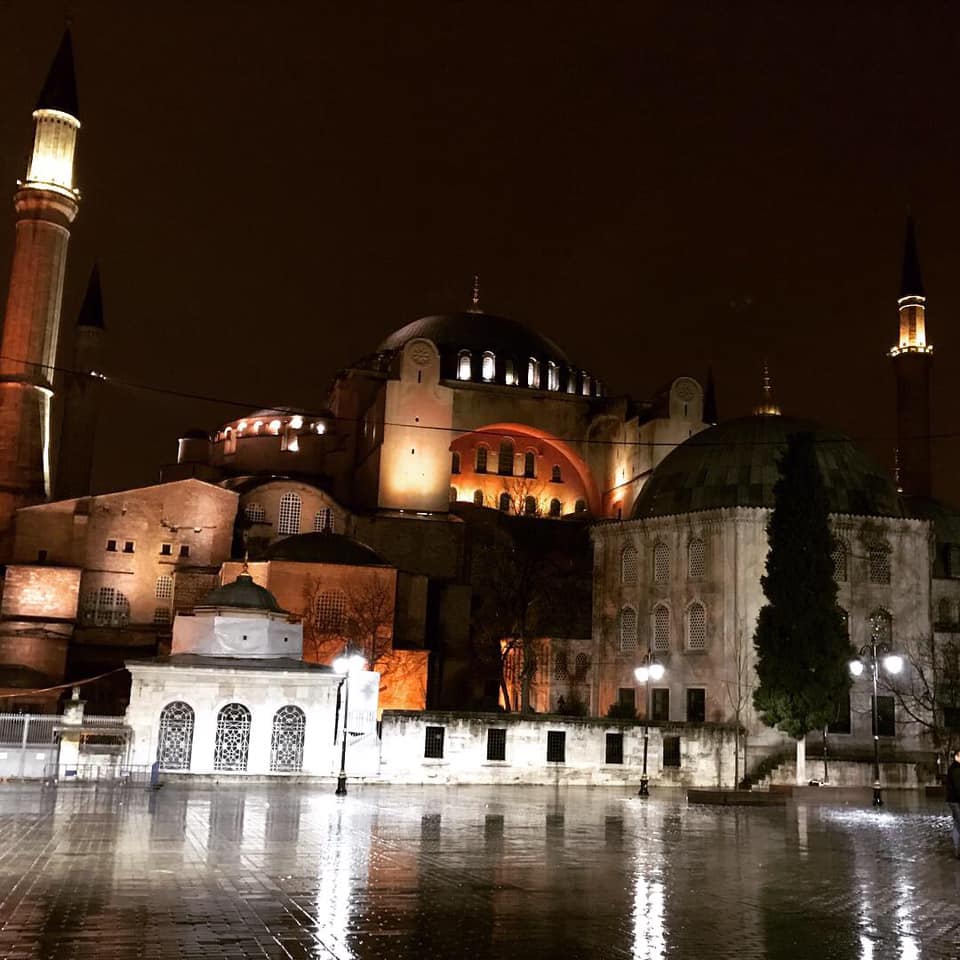
Just across the square stood the piece de resistance of Istanbul – the magnificent Hagia Sophia museum. It was of course closed this late in the evening, but you couldn’t deny its imposing – and goosebump inducing – presence. Silhouetted against the lights behind, and lit up only barely on the outside, this church-turned-mosque-turned-museum tells you very quickly why it was once the glory of the Byzantine empire, and is the glory of Istanbul today.
We went to the Fatih tram station from here, and immediately, it was a more modern part of the city with lights and fancy cars and fast-moving trams. We had nowhere to go right then, so all we did was top-up the IstanbulKart we had bought in the airport for our travels next day. A quick dinner at one of the restaurants, we we were back at the AirBnB again for the night.
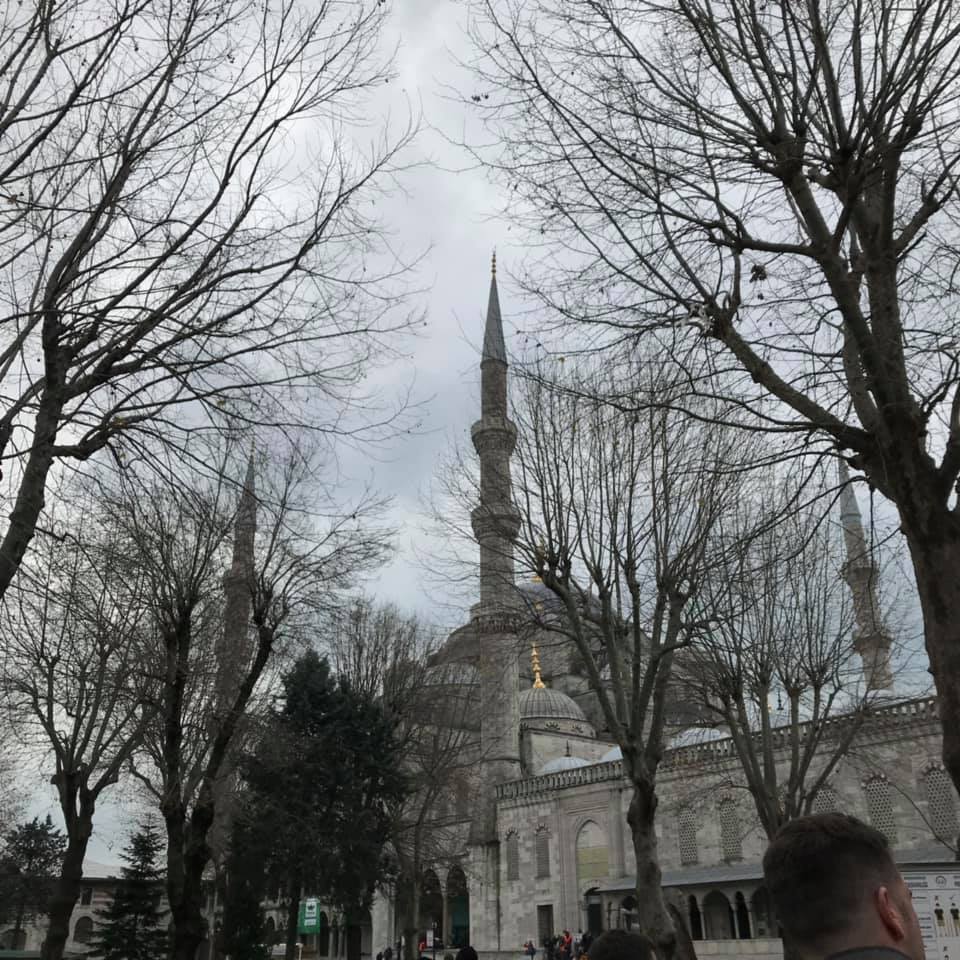
Next morning, we headed out again to the Sultanahmet square. We chose the first restaurant we saw for a quick cup of tea and breakfast. It was a miniature version of a real Turkish breakfast, and even then it was loaded with cheeses, eggs, olives, fruits and a little bowl of the tastiest honey we’d ever had. Post that, and fending off cats and kittens, we landed at the large queue for entry to the Blue Mosque/Sultanahmet mosque. There’s no entry fee and the queue was really long. It took us a fair 45-minutes to get the entrance of the mosque, where we had to take off our shoes and put them in free-of-cost plastic bags. I was also told to cover my head and if I didn’t have a scarf (I did), they would provide one free of cost.
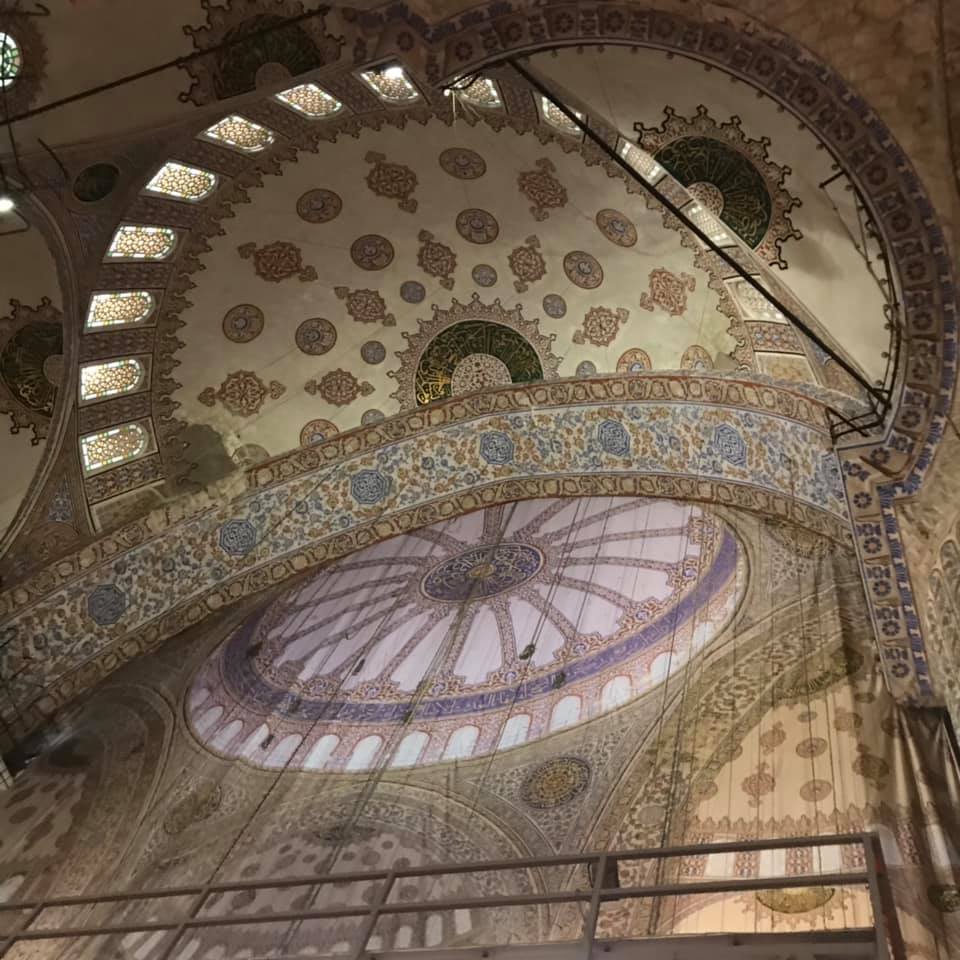
Inside, the mosque instantly impresses. Covered in floor-to-floor carpets, the entire mosque is decorated with floral and geometric designs set in over 21,000 Iznik (Nicea) tiles, about 260 windows with stained glass, and calligraphy art of Koranic verses. The large central dome is supported by smaller domes and the mosque is still an active place of worship. It is closed for about half-an-hour at prayer times, but it is common to see the faithful sitting on the carpets, facing the finely sculpted marble Mihrab (direction of Mecca). The beauty of the tiles and the stained glass windows, all of which have a distinct blue shade, overwhelms you. Photography is allowed, and flash photography, though discouraged, is fine.
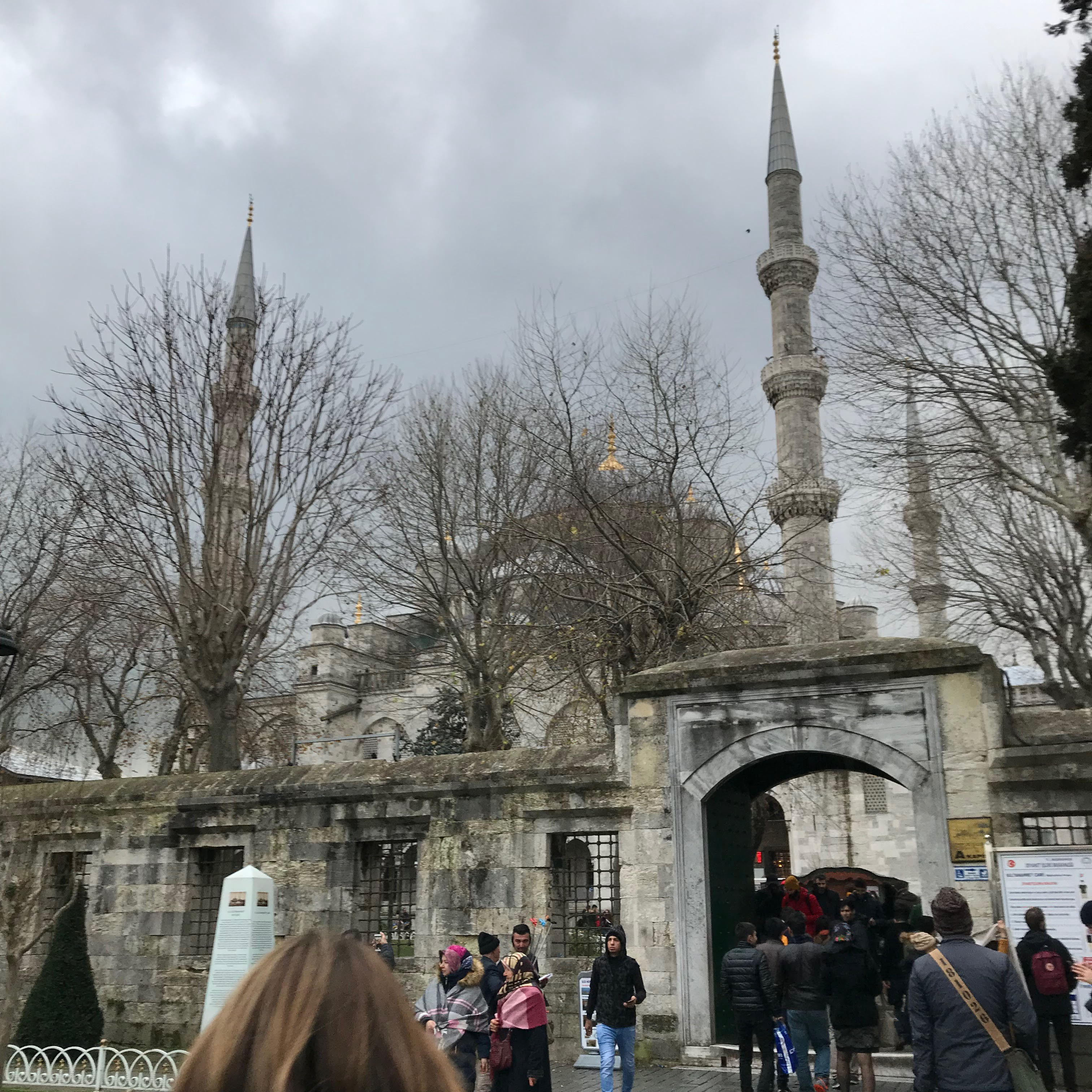
Back at the courtyard, stand for a moment and take in the immensity of the mosque. This is one of the two mosques in Turkey with six minarets, and the multitude of smaller domes against the massive central dome is a sight worth spending some time on. The greyish blues of the mosque’s domes were accentuated on this morning by an overcast sky, and as an introduction to the wonders of Istanbul, this will leave you absolutely mesmerised.
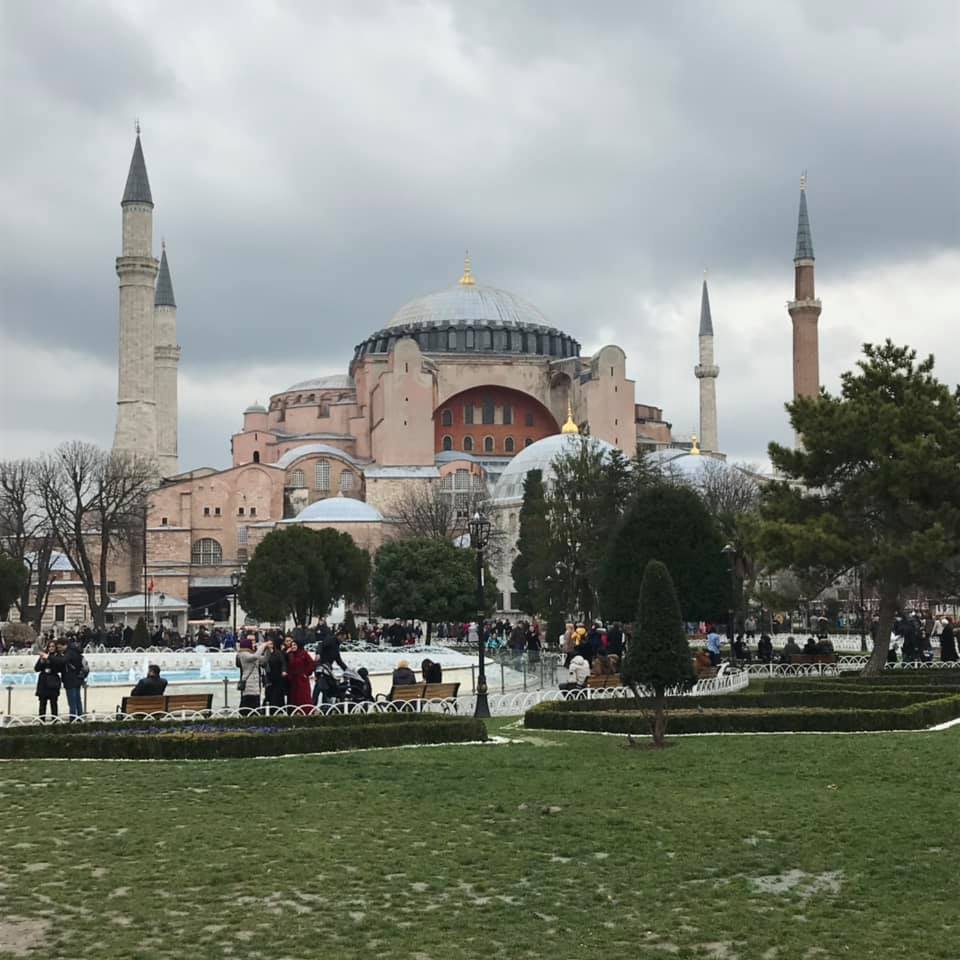
Walk across a small pathway to the Hagia Sophia, the biggest attraction of the city. And when we say biggest, we mean biggest. The scale of the museum is massive, and you’d have throw your head back as far as you can to take in the height of the museum. There is an entry fee at the museum, aout 60 TL, but there are people who can get you in for a slightly higher charge. It was raining and very windy when we went, and we paid about 70 TL each to one of these men for a quick access.
If we thought the Blue Mosque was immense, we had no idea about the interiors of Hagia Sophia, or as it is called locally, Aya Sofya. Built and rebuilt since the 4th century, each addition to the structure had its own identity, down to the massive roundels placed on the balcony with Quranic verses.
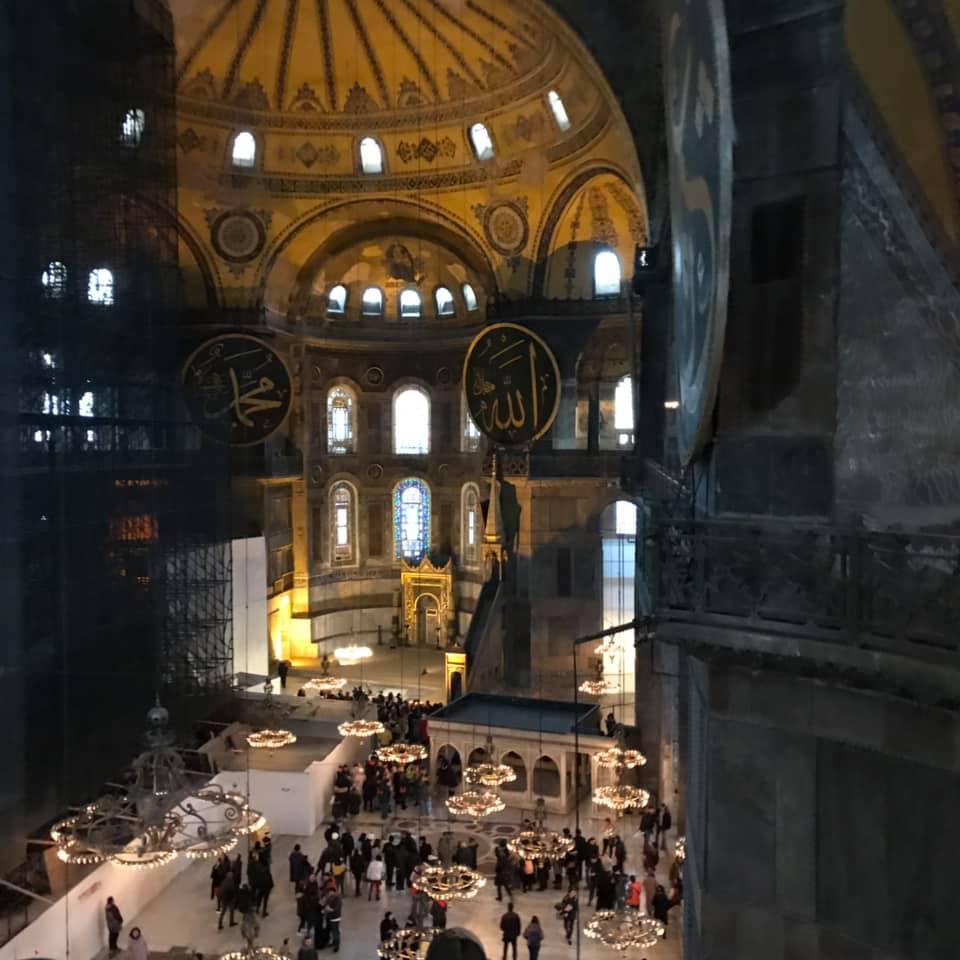
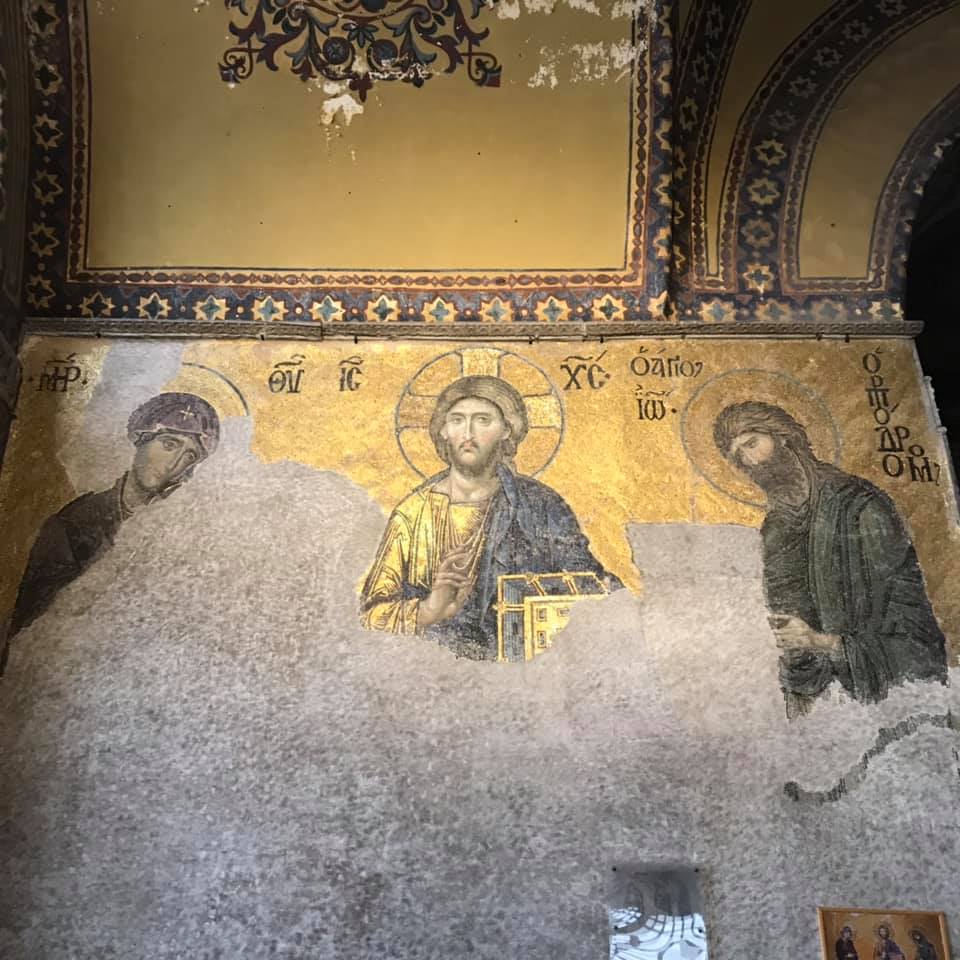
A part of the museum was under repairs, so there were loads of unsightly scaffolding on one side. But the rest of it, my god! The first thing you notice are the chandeliers. Get past them and you see the iconic roundels on the balconies. We don’t want to get into too many details because you’d get them online, and because we don’t want to ruin your first stunning moment inside the great monument. But do keep your eyes open for the wall murals.
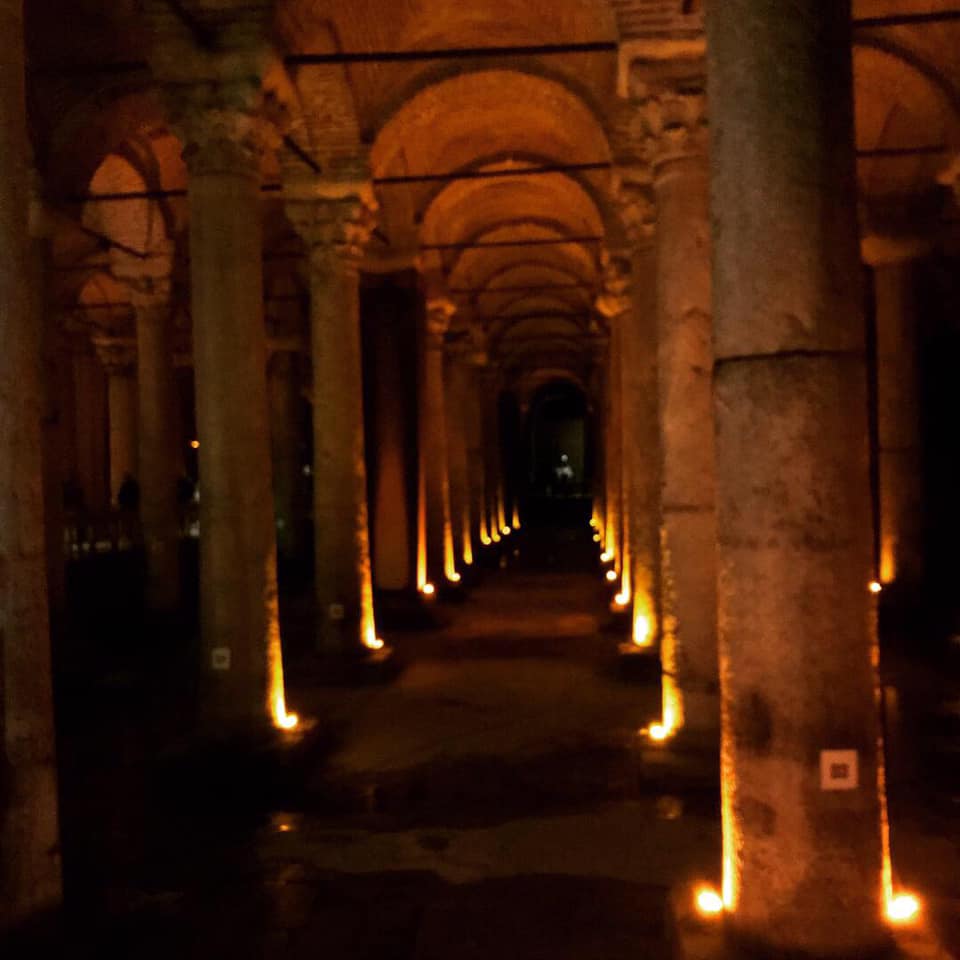
At a walking distance from the Hagia Sophia is the Basilica Cistern, made famous in “Inferno” of Dan Brown in recent times. There is again an entry fee and again we bypassed it for a little extra cost. It is an underground cistern and the place, with its red-hued lighting looks absolutely surreal.
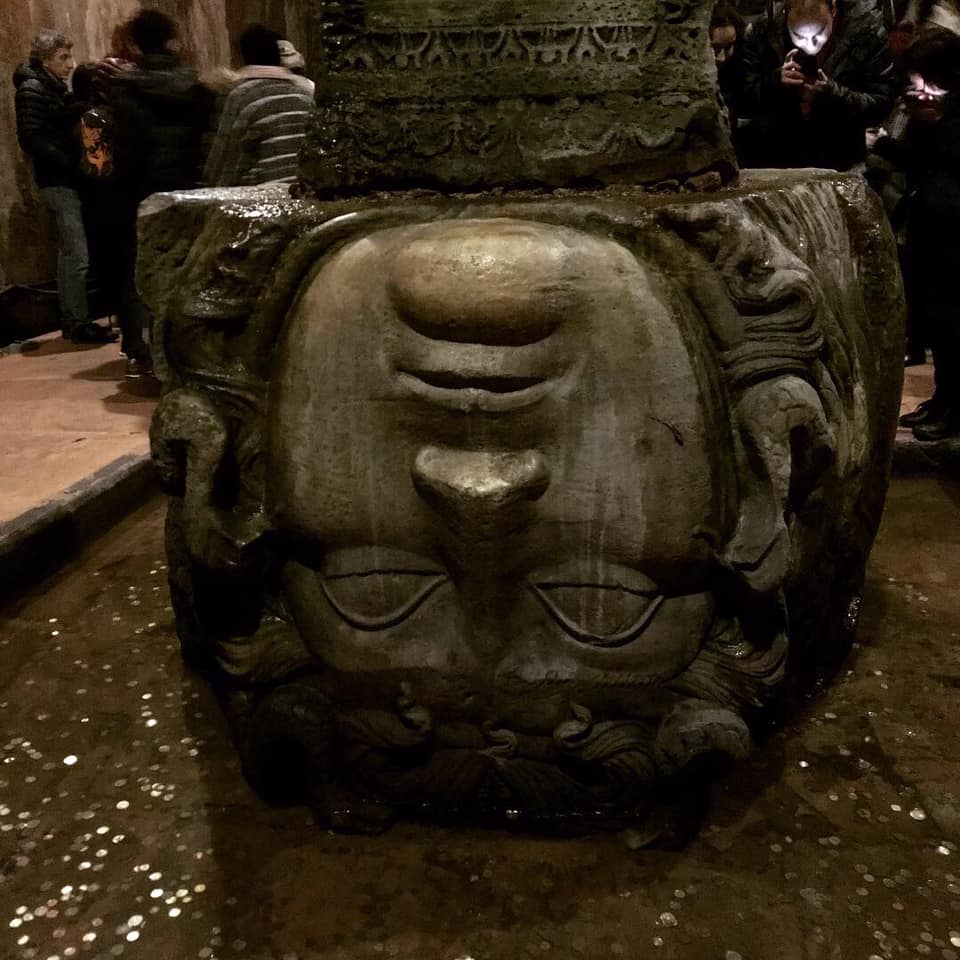
Walk a little further, and you’ll see the inverted Medusa heads serving as the base of two pillars. Tradition has it that the blocks are oriented sideways and inverted in order to negate the power of the Gorgons’ gaze. But while you look for them, do not ignore the other pillars either, especially the hen’s eye pillar.
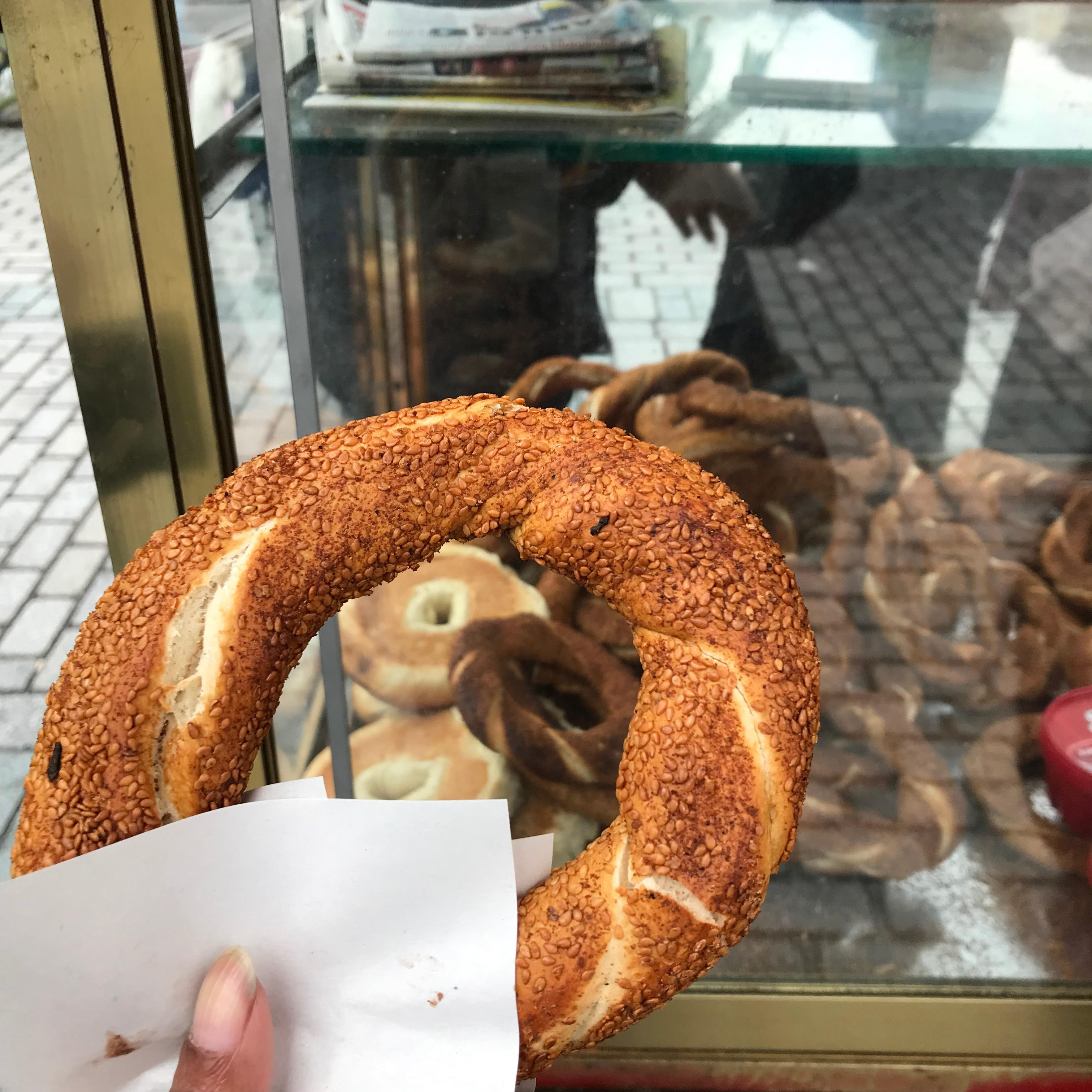
Later that evening, we walked back to the Sultanahmet square and stopped for a Simit and roasted water chestnuts. The Simit is a local bagel with a generous sprinkling of sesame seeds. Make sure you get the seller to put a layer of butter between the layers or it can be very drying. Water chestnuts, because they are roasted are quite dry too.
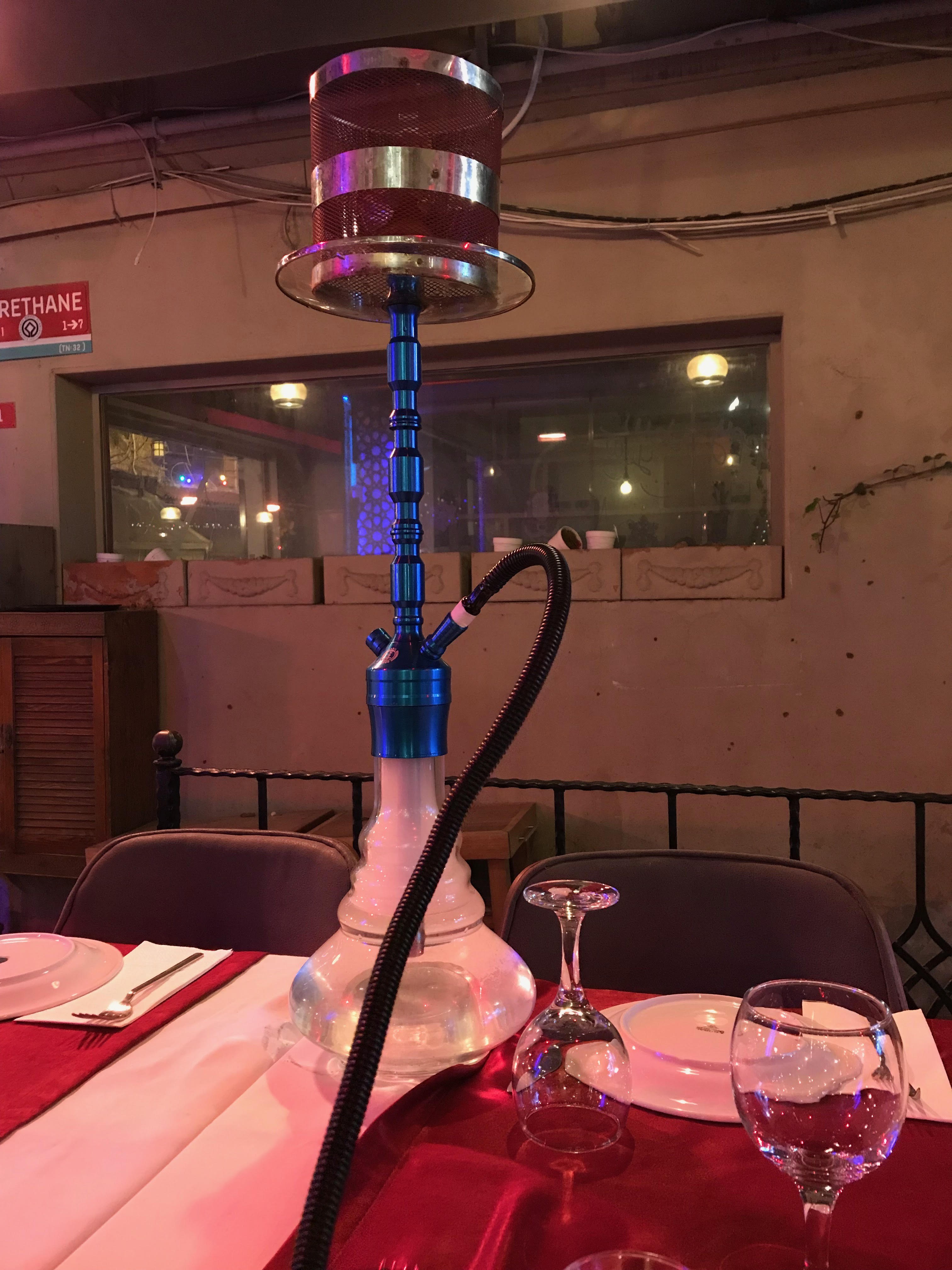
For dinner that evening, we walked into the busy Fatih-Alemdar area and settled at one of the restaurants there. Chairs spilled out onto the street and there was a lingering haze from the hookahs being smoked at every table. Soon, a set of musicians came over, and when they heard we were Indians, they sang for us a Turkish version of the very popular Awara Hoon song, and told us just how popular actor Raj Kapoor is in Turkey. They may not know the biggest contemporary superstars of the Hindi fim industry, but Raj Kapoor is a demi-god almost in Turkey.
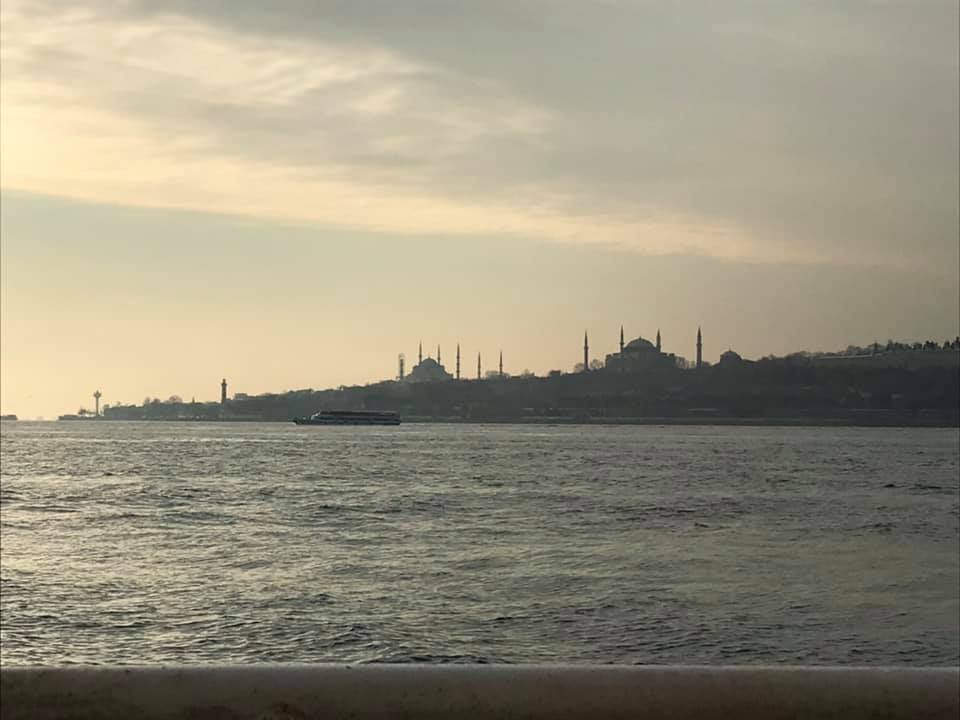
Next morning, we headed out by tram and then ferry to Kadikoy, the Asian side. The Bosphorous ferry is simple, but beautifully maintained and there were live local musicians on the ferry. On the other side, we stopped by the Kadikoy local market and had a filling lunch there. We walked around a little, but got back early because we had tickets to see a whirling dervish show at Hodja Pasha.
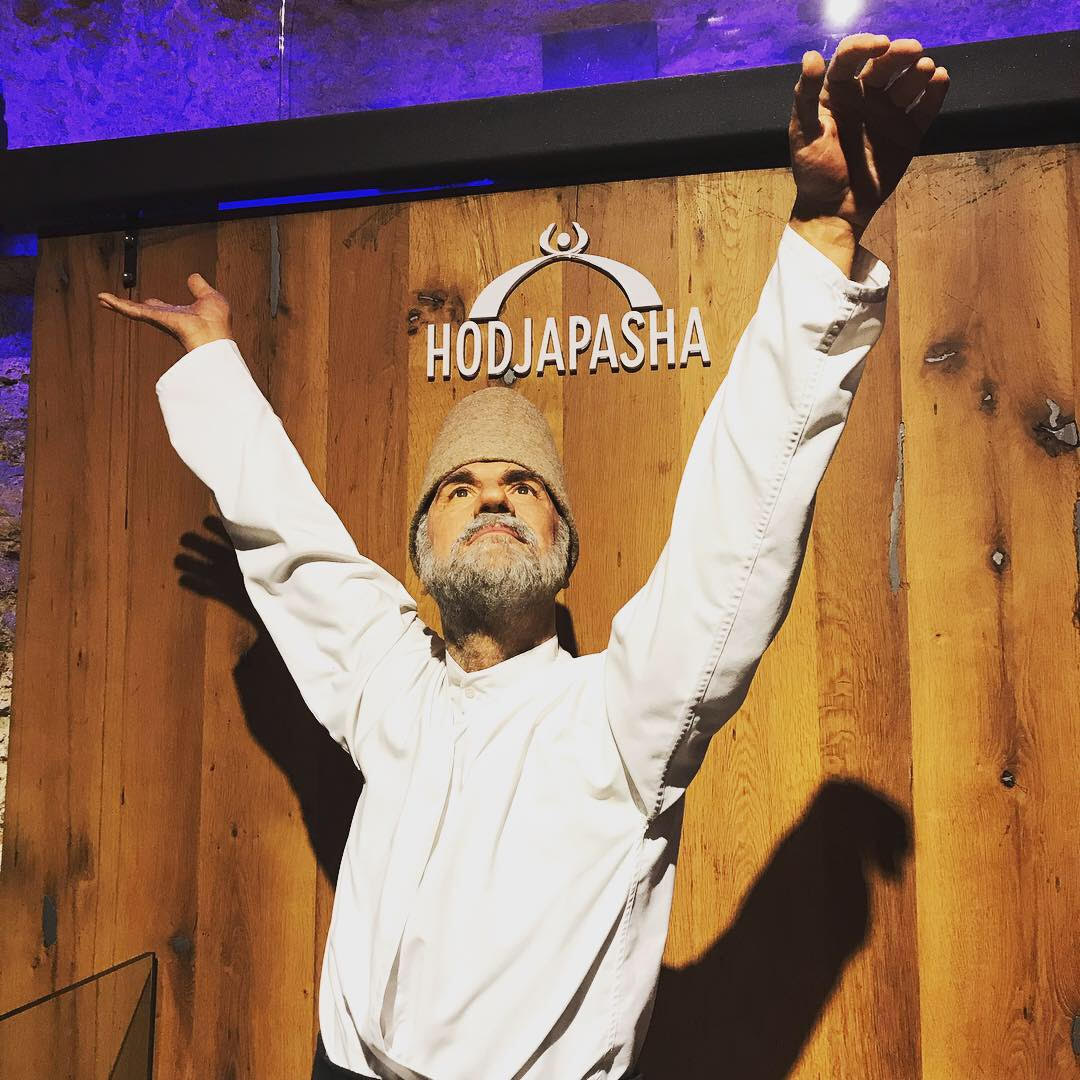
Hodja Pasha is a cultural centre and they hold regular shows of whirling dervishes and more. It was a tiny bit expensive, but we had booked a show. Inside, there were life size statues of the different parts of the dervish band. Then, when the show started in a dimly lit old hamam, we sat mesmerised by the haunting vocals and then the grace of the dervishes. Everything is explained by a voiceover, and you cannot interrupt, leave your seat or take photos. The sema ceremony, as it is called, is not a performance, so you are advised to not disrupt it in any way.
Dinner was an one more of those many, many restaurants along Fatih, and another quick walk around the Sultanahmet square later, we headed back to our AirBnb, ready for the next part of our trip the following morning.
 Travels of Kay and Chi